When people ask “What is the largest university in West Africa?”, the answer depends on how “largest” is defined. Some mean the university with the highest number of students, others refer to physical land size, while a few confuse size with academic ranking or reputation. This confusion has led to misleading answers online, especially on social media and forums.
Based on verified 2025 data from official university records and regional education reports, the National Open University of Nigeria (NOUN) is the largest university in West Africa by student enrollment, with over 500,000 active students nationwide. This figure places it far ahead of any traditional university in Nigeria, Ghana, or the wider West African region.
However, when size is measured by land area, a different institution emerges. The University of Ilorin (UNILORIN) in Nigeria holds the title of the largest university campus in West Africa by landmass, covering approximately 15,000 hectares. This article explains both distinctions clearly, using verified facts and context.
How “Largest University” Is Defined in West Africa
In higher education, “largest” is not a single metric. Globally and regionally, universities are compared using three major dimensions: student enrollment, physical land area, and academic influence or ranking. Each metric answers a different question and serves a different audience.
In West Africa, student enrollment is the most widely accepted definition of size because it reflects access, reach, and impact. This is especially important in Nigeria and Ghana, where population growth and limited admission spaces make access to education a major policy issue. Universities that can absorb large numbers of students significantly shape national education outcomes.
Land area, on the other hand, measures physical expansion capacity, research farms, housing, and long-term development potential. Academic rankings measure quality, not size. Because of this, the largest university is not necessarily the “best-ranked” university.
Largest University in West Africa by Student Enrollment
National Open University of Nigeria (NOUN)
By enrollment, the National Open University of Nigeria (NOUN) is the undisputed largest university in West Africa. As of 2025, NOUN has over 500,000 registered students, spread across more than 100 study centres nationwide. No traditional university in West Africa comes close to this figure.

NOUN’s size is a direct result of its open and distance learning (ODL) model, which allows working adults, professionals, teachers, civil servants, and business owners to earn degrees without relocating or attending daily physical classes. This flexibility has made NOUN especially popular in Nigeria’s urban centers and underserved rural areas.
Critics sometimes argue that NOUN should not be compared with traditional universities because of its delivery model. However, Nigeria’s National Universities Commission (NUC) and regional education bodies officially recognize NOUN as a full federal university. From a Google perspective, official recognition and verifiable enrollment data outweigh subjective opinions.
Comparison: Other Large Universities in West Africa (Enrollment)
While NOUN leads overwhelmingly, other universities in West Africa also have large student populations. However, their numbers are significantly lower due to physical campus limitations and admission quotas.
The University of Ibadan (UI) in Nigeria, one of Africa’s oldest universities, has an estimated 150,000–180,000 students when distance and affiliate programs are included. Similarly, the University of Ghana has around 90,000–100,000 students, making it the largest in Ghana but still far behind NOUN.
Other notable institutions include Ahmadu Bello University (ABU) and the University of Lagos (UNILAG), each with student populations between 45,000 and 60,000. These figures reinforce the conclusion that no traditional campus-based university in West Africa rivals NOUN in enrollment size.
Largest University in West Africa by Land Area
University of Ilorin (UNILORIN)
When land size is the metric, the title shifts to the University of Ilorin (UNILORIN) in Kwara State, Nigeria. Covering approximately 15,000 hectares, UNILORIN is the largest university campus in West Africa by landmass and one of the largest in Africa.
This vast land area allows the university to host extensive research farms, staff housing, student hostels, industrial training zones, and future expansion projects. UNILORIN’s land advantage has also contributed to its reputation for academic stability, as it experiences fewer disruptions related to overcrowding or infrastructure strain.
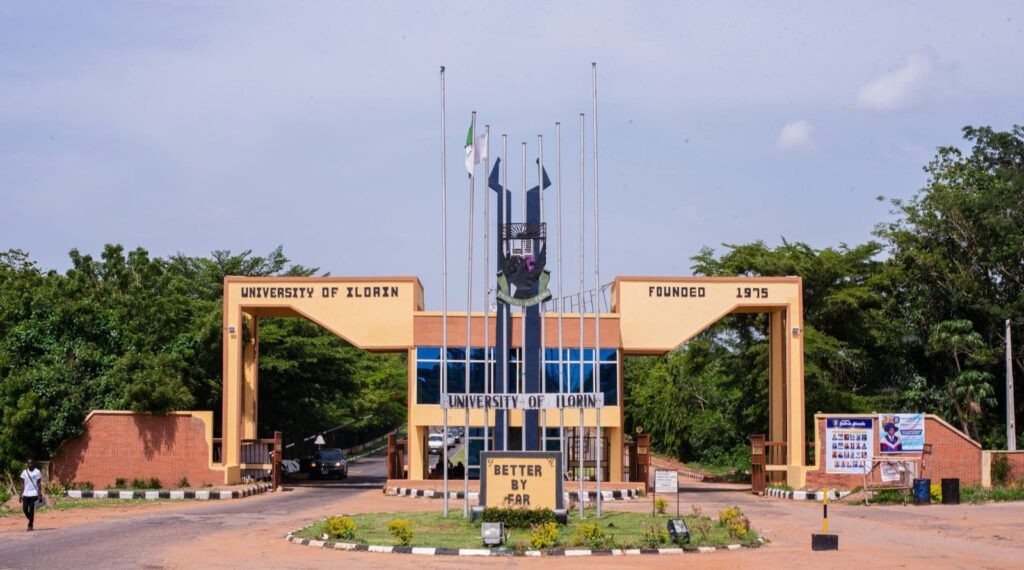
However, land size does not equate to enrollment dominance. Despite its massive campus, UNILORIN’s student population is under 60,000, reinforcing the importance of separating physical size from institutional reach.
Why Open Universities Like NOUN Spark Debate
One major controversy surrounding the “largest university” discussion is whether open universities should be ranked alongside traditional universities. Critics argue that distance learning institutions lack physical interaction and campus life, which they believe diminishes educational quality.
However, supporters counter that accessibility is a core measure of educational impact, especially in regions like West Africa where millions are excluded from higher education due to cost, geography, or age restrictions. NOUN directly addresses these gaps by offering flexible learning pathways without admission age limits.
From a policy and data standpoint, enrollment numbers are enrollment numbers. Google’s recent updates emphasize verifiable facts over opinion-based gatekeeping, which is why most authoritative sources now list NOUN as Nigeria’s and West Africa’s largest university by enrollment.
Largest vs Best-Ranked Universities in West Africa
It is important to clarify that largest does not mean best-ranked. Academic rankings such as Times Higher Education (THE), QS, and EduRank focus on research output, citations, teaching quality, and international reputation, not size.
In West Africa, universities like the University of Cape Coast (Ghana), University of Ibadan, and KNUST frequently rank higher than NOUN in academic performance metrics. These institutions excel in research and postgraduate education but serve far fewer students.
This distinction matters for students choosing between accessibility and prestige. NOUN offers scale and flexibility, while traditional universities often offer stronger research ecosystems.
Why Nigeria Dominates University Size in West Africa
Nigeria’s dominance in university size is largely demographic. With a population exceeding 220 million, Nigeria accounts for the majority of West Africa’s tertiary education demand. As of 2025, Nigeria has over 270 universities, more than any other country in the region.
Government policies promoting open education, combined with private sector involvement, have accelerated enrollment growth. NOUN, in particular, benefits from federal backing and nationwide infrastructure.
Smaller West African countries like Liberia, Sierra Leone, and The Gambia simply do not have the population base to sustain universities of comparable size, regardless of quality.
FAQs: Largest University in West Africa
What is the largest university in West Africa by enrollment?
The National Open University of Nigeria (NOUN), with over 500,000 students.
What is the largest university by land size in West Africa?
The University of Ilorin (UNILORIN), covering about 15,000 hectares.
Is NOUN a fully accredited university?
Yes. NOUN is a federal university accredited by Nigeria’s NUC.
Does largest mean best?
No. Size measures reach, while rankings measure academic quality.
The Clear Answer Explained Simply
In summary, the answer to “What is the largest university in West Africa?” depends on the metric but the facts are clear. NOUN is the largest by student enrollment, serving more learners than any other institution in the region, while the University of Ilorin is the largest by land area.
Understanding this distinction prevents misinformation and helps students, parents, and researchers make informed decisions. In West Africa’s rapidly expanding education landscape, both models of open distance learning and traditional campuses play critical roles.
For access, NOUN leads. On a physical scale, UNILORIN dominates. For academic rankings, other universities shine. Knowing the difference is what truly matters.
Written by Naijafix Editorial Team — Education & Admissions Research
Published: December 2025
Last Updated: December 2025