As of early 2026, the National Universities Commission (NUC) recognizes over 274 universities operating across the Nigerian federation. This massive growth is a response to a youth population exceeding 70 million, where the demand for degree-awarding institutions remains at an all-time high. When we talk about the “largest” university, it is important to distinguish between two categories: enrollment (the number of active students) and landmass (the physical size of the campus).

Traditional federal universities like the University of Ibadan and Ahmadu Bello University continue to dominate in terms of physical infrastructure and academic prestige. However, the National Open University of Nigeria (NOUN) has fundamentally shifted the definition of scale through its distance-learning model, providing access to over 500,000 students in 2025 across the nation. This guide explores the institutions that lead the country in both student reach and physical territory.
Top 10 Universities by Enrollment (2026 Estimates)
| Rank | University | Enrollment Est. | Primary Location |
| 1 | National Open University (NOUN) | 500,000+ | Abuja (HQ) |
| 2 | University of Benin (UNIBEN) | 77,000 | Benin City |
| 3 | University of Lagos (UNILAG) | 60,000 | Akoka, Lagos |
| 4 | University of Nigeria, Nsukka (UNN) | 60,000 | Nsukka, Enugu |
| 5 | University of Abuja (UNIABUJA) | 55,000 | Gwagwalada, FCT |
| 6 | Ahmadu Bello University (ABU) | 54,000 | Zaria, Kaduna |
| 7 | University of Maiduguri (UNIMAID) | 52,000 | Maiduguri, Borno |
| 8 | University of Ilorin (UNILORIN) | 50,000 | Ilorin, Kwara |
| 9 | Bayero University Kano (BUK) | 45,000 | Kano State |
| 10 | University of Ibadan (UI) | 41,000 | Ibadan, Oyo |
Detailed School Profiles
1. National Open University of Nigeria (NOUN)
The National Open University of Nigeria (NOUN) is the country’s undisputed leader in student population, serving as a massive educational hub for over half a million students. Established in 2002, NOUN was designed to democratize higher education by removing traditional barriers such as age, location, and the rigorous JAMB examination cut-offs that often limit access to traditional universities. It operates through a vast network of over 103 study centers, bringing the classroom to the doorstep of every Nigerian.
Academically, NOUN is favored by working professionals and mature students who require a flexible learning schedule. According to Statista data, it remains the most significant player in the open distance learning (ODL) space in West Africa. While it lacks the unified residential campus of traditional schools, its digital reach and administrative scale make it the largest educational ecosystem in the country.
2. University of Ilorin (UNILORIN)
UNILORIN holds the prestigious title of the largest university in Nigeria by physical size, occupying a sprawling expanse of approximately 15,000 hectares. Founded in 1975, the university has long been the most sought-after choice for JAMB applicants, largely due to its historically stable academic calendar and its reputation for academic discipline. Its motto, “Learning and Character,” is reflected in its rigorous standards and high-performing graduates.
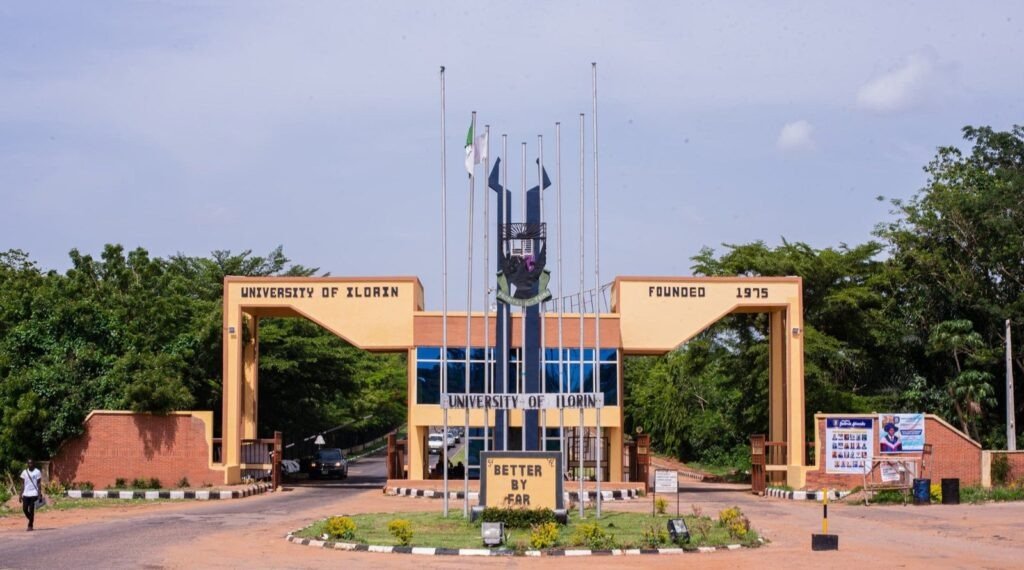
The university leverages its massive landmass for extensive agricultural research and commercial farming projects. This physical scale allows UNILORIN to host a vast array of faculties, a world-class teaching hospital, and extensive student housing within its own borders. It is a prime example of a “university city” where students can live, work, and study within a self-contained environment.
3. University of Benin (UNIBEN)
The University of Benin (UNIBEN) is a cornerstone of Nigerian higher education, hosting an estimated 77,000 students across its Ugbowo and Ekehuan campuses. Founded in 1970, it began as the Midwest Institute of Technology and has evolved into a high-energy institution known for its competitive spirit. UNIBEN is particularly famous for its medical and engineering programs, which consistently rank among the top in the nation.
The university’s Select Admission Policy ensures that despite its massive size, it remains a destination for high-achieving students from across the federation. Its alumni network is one of the most vast and active, with “Great Benin” graduates occupying key leadership roles in both the public and private sectors globally. The school’s cultural impact on Benin City is profound, serving as the intellectual heart of the region.
4. University of Lagos (UNILAG)
Founded in 1962, the University of Lagos (UNILAG) is an urban research giant located in the heart of Nigeria’s commercial capital. It currently shares the #1 spot in Nigeria in the Times Higher Education 2026 rankings. With a body of 60,000 students, UNILAG operates across its scenic lagoon-front Akoka main campus and its specialized medical college in Idi-Araba.
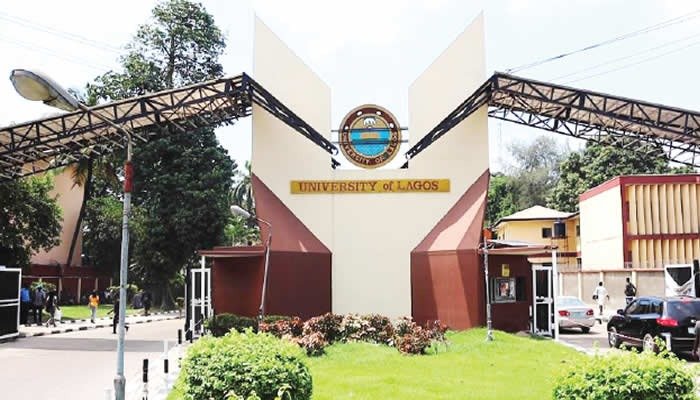
UNILAG is frequently called the “University of First Choice” due to its proximity to industry hubs and the creative energy of Lagos. Its research quality is ranked as the highest in the country, particularly in business, law, and engineering. The university’s vibrant urban environment makes it a critical incubator for Nigeria’s thriving tech and media industries, often referred to as the “Silicon Valley of West Africa.”
5. Ahmadu Bello University (ABU) Zaria
Ahmadu Bello University (ABU) is the premier institution of Northern Nigeria and one of the most extensive in Sub-Saharan Africa. Occupying 7,000 hectares in the ancient city of Zaria, ABU was established in 1962 and named after the Sardauna of Sokoto. It operates two main campuses Samaru and Kongo alongside a massive network of research institutes and teaching hospitals that serve the entire northern belt.
With over 54,000 students, ABU is a cultural melting pot for students from every state in the federation. It is particularly strong in agriculture, veterinary medicine, and engineering, supported by some of the largest university landmasses in the country. Historically, ABU has been the cornerstone of northern intellectual life and continues to set the standard for doctoral studies, housing the Kashim Ibrahim Library, one of Africa’s largest.
6. Obafemi Awolowo University (OAU) Ile-Ife
Obafemi Awolowo University (OAU) is often cited as the most beautiful campus in Nigeria, spanning 13,000 hectares of rolling hills and modernist architecture. Established in 1961, OAU was built with a mission to promote African culture and science, a legacy that survives through its world-renowned Institute of Cultural Studies and its premier Faculty of Pharmacy.
The university hosts approximately 40,000 students and is a leader in technological innovation. OAU was the first in the country to establish a dedicated university-based technology park. Its student culture is famously active and intellectually rigorous, earning its graduates a reputation for critical thinking and resilience in the professional world, as frequently noted in EduRank’s 2025 assessments.
7. University of Ibadan (UI)
The University of Ibadan (UI) is Nigeria’s oldest university, founded in 1948. It remains the best university in Nigeria for 2025 according to several global ranking platforms. While its enrollment of 41,000 is smaller than some of its peers, UI is unique because its postgraduate school is the largest in Africa, consistently producing the highest volume of PhDs in the region.
UI serves as the benchmark for research excellence in West Africa. Its campus features iconic landmarks like the Kenneth Dike Library, which houses one of the most significant academic collections on the continent. UI remains the “Premier University,” maintaining a near 50/50 split between undergraduate and postgraduate research and excellence, a status affirmed by US News rankings.
8. University of Abuja (UNIABUJA)
The University of Abuja (UNIABUJA) is the flagship institution of the Federal Capital Territory. Located on an expansive 11,824-hectare site along the Airport Road, it was designed to be a dual-mode university offering both traditional on-campus learning and distance education to approximately 55,000 students.
UNIABUJA has seen massive expansion recently, particularly in its law, public administration, and medical faculties. Its location in the nation’s capital gives students unprecedented access to federal institutions and international organizations. The sprawling campus in Gwagwalada is a hub for future expansion, bridging the northern and southern educational systems of Nigeria.
9. Bayero University Kano (BUK)
Bayero University Kano (BUK) is a major center for contemporary and Islamic studies, hosting over 45,000 students. It currently ranks in the top five universities in Nigeria and leads the nation in “International Outlook” due to its strong global collaborations, particularly with institutions in the Middle East and the United Kingdom.
BUK is a world leader in dry-land agriculture, housing a World Bank-funded “Africa Centre of Excellence.” The university plays a pivotal role in the development of Kano State, serving as a hub for industrial research and the preservation of northern culture across its five expansive campuses.
10. University of Nigeria, Nsukka (UNN)
The University of Nigeria, Nsukka (UNN) was the first fully indigenous university in the country, founded in 1960. Modeled after the American “land-grant” system, UNN currently hosts over 60,000 students across its Nsukka, Enugu, and Ituku-Ozalla campuses. It was established with a mission to “Restore the Dignity of Man.”
UNN is a heavyweight in engineering, law, agriculture, and the humanities. Its mission is reflected in its vibrant campus life and rigorous academic standards, having recently broken into the top 400 worldwide for Law according to UoPeople’s analysis. Today, it remains a top-tier research institution, particularly known for its strong output in computer science and health technologies.
Frequently Asked Questions (FAQ)
Q1: Which is the largest university in Nigeria by student population?
The National Open University of Nigeria (NOUN) is the largest with over 500,000 students. Among traditional campus-based schools, the University of Benin (UNIBEN) and UNN typically hold the highest enrollment numbers.
Q2: Which Nigerian university has the largest landmass?
The University of Ilorin (UNILORIN) is the largest by land area, spanning 15,000 hectares. This makes it one of the largest university permanent sites in the world, as highlighted by CEO Reporter.
Q3: Does a larger university mean a better education?
Not necessarily. While larger universities (like UI or UNILAG) often have more resources and higher research rankings, smaller private universities often offer more personalized attention and faster academic calendars.
Choosing the Right Scale for Your Goals
Choosing the right institution is about balancing your personal needs with the university’s strengths. Whether you are drawn to the 15,000-hectare expanse of UNILORIN or the 500,000-student network of NOUN, the scale of Nigeria’s top universities offers something for everyone. In 2026, the trend is shifting toward “Smart Campuses,” where even the largest universities are integrating AI and digital portals to manage their massive student bodies more effectively.
Ultimately, being part of a “large” university means you are part of a massive ecosystem of research, culture, and opportunity. As Nigeria continues to expand its educational capacity, these ten institutions will remain the pillars of human capital development for the nation.
Written by: Kehinde Mosope

Tech & SEO Specialist | Founder of NaijaFix

5+ Years Experience in Mobile Troubleshooting & Consumer Tech

Published: January 26, 2026

Last Updated: January 26, 2026

About the Author: Kehinde Mosope helps Nigerians solve everyday phone, network, and internet problems using real tests and practical solutions, not theories.